Exploration · Status: Parked
Painting with AI — can it work in my own style?
Role: the painter, and the person who decides what counts as good
AI used: Claude (Claude Code), ChatGPT, Codex
Dates: 4 to 6 October 2026.
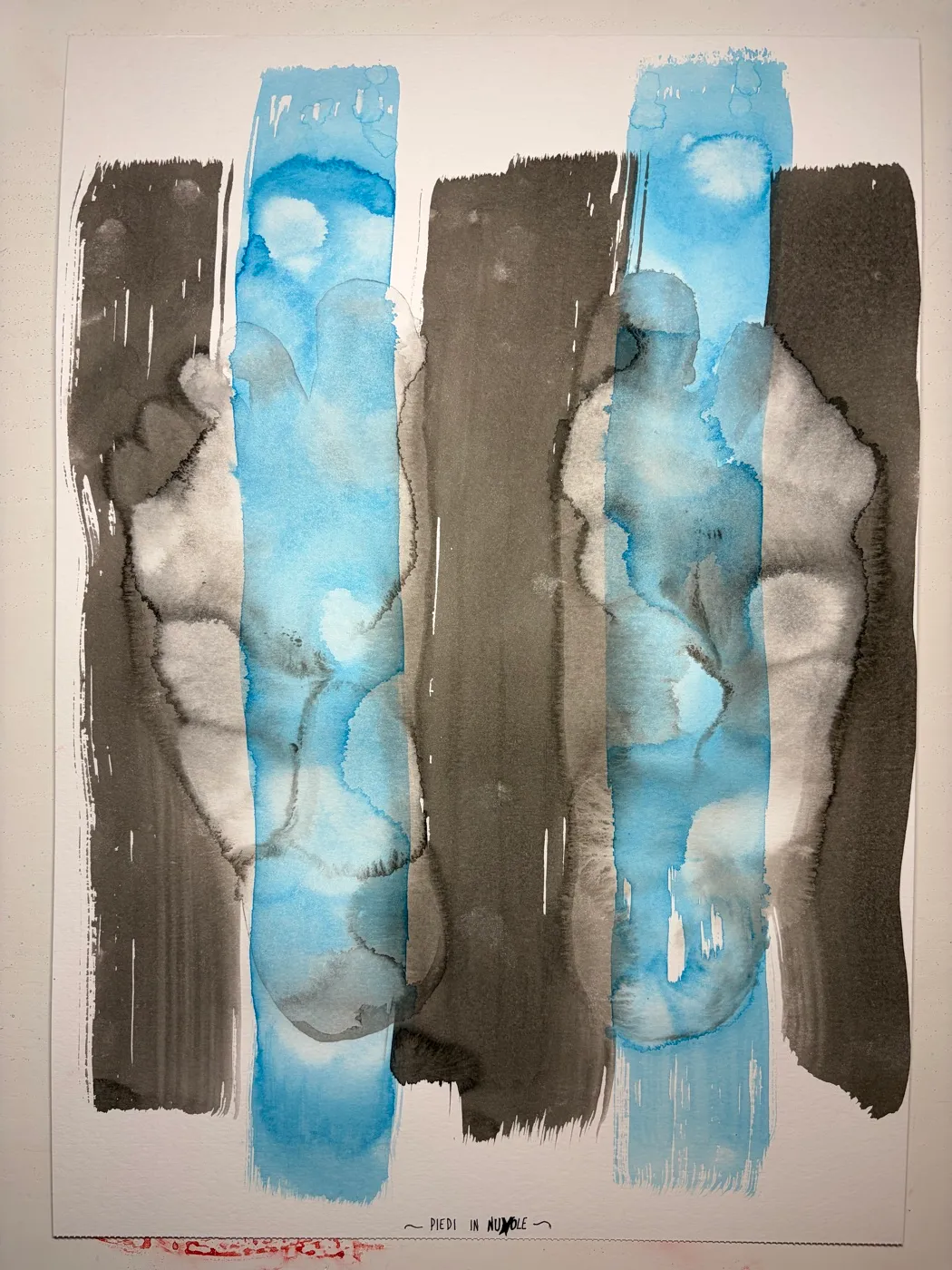
The reference. Sumi ink and cyan acrylic ink on Fabriano A3. The feet were drawn with clean water first.
The question
AI-made images all start to look alike. I paint, so I wanted to know whether my own paintings could give my projects a look that is mine: colours, type, motion, maybe a character. The test was simple. Would I accept the result as close to my work?
What I tried
- A style kit. Claude built “Ink Body” from one painting: colour tokens, fonts, motion rules and texture crops. It rendered the same 12 second video in two tools, HyperFrames and Remotion. Both followed the kit. Neither looked good to me.
- Generated paintings. I explained my process to ChatGPT. I draw the subject with water first, then lay black sumi, then cyan, one stroke at a time in one direction, and the ink travels through the water. It wrote the technique down, read papers on how pigment moves in paper, and generated eleven images: hands, a bird, a jellyfish, a leaf. Some look plausible. None follows the process, so none was accepted.
- An ink simulation. Claude wrote a fluid simulation in the browser, with paper and texture taken from crops of my painting. It measured the result against the painting and tuned it. Three times a number improved while the picture got worse. Each time, the problem only showed when someone looked at the image.
- Experiments with a control. We set the pass and fail rules before each run and compared one ink drop on a wet patch with the same drop on dry paper. The first run failed: the simulation was creating ink, 88 times the amount dropped. The fix showed a second problem. The ink spread evenly and left no dense mark where it landed.
- A published ink model. We found MoXi (Chu and Tai, SIGGRAPH 2005), a model of ink in absorbent paper, and rebuilt it with water drawn first and one stroke through it. My verdict: really bad.
- Looking for real footage. Codex searched for videos of ink moving on paper to use as a reference. The ones it found were edited or mixed several artists, so none could serve.
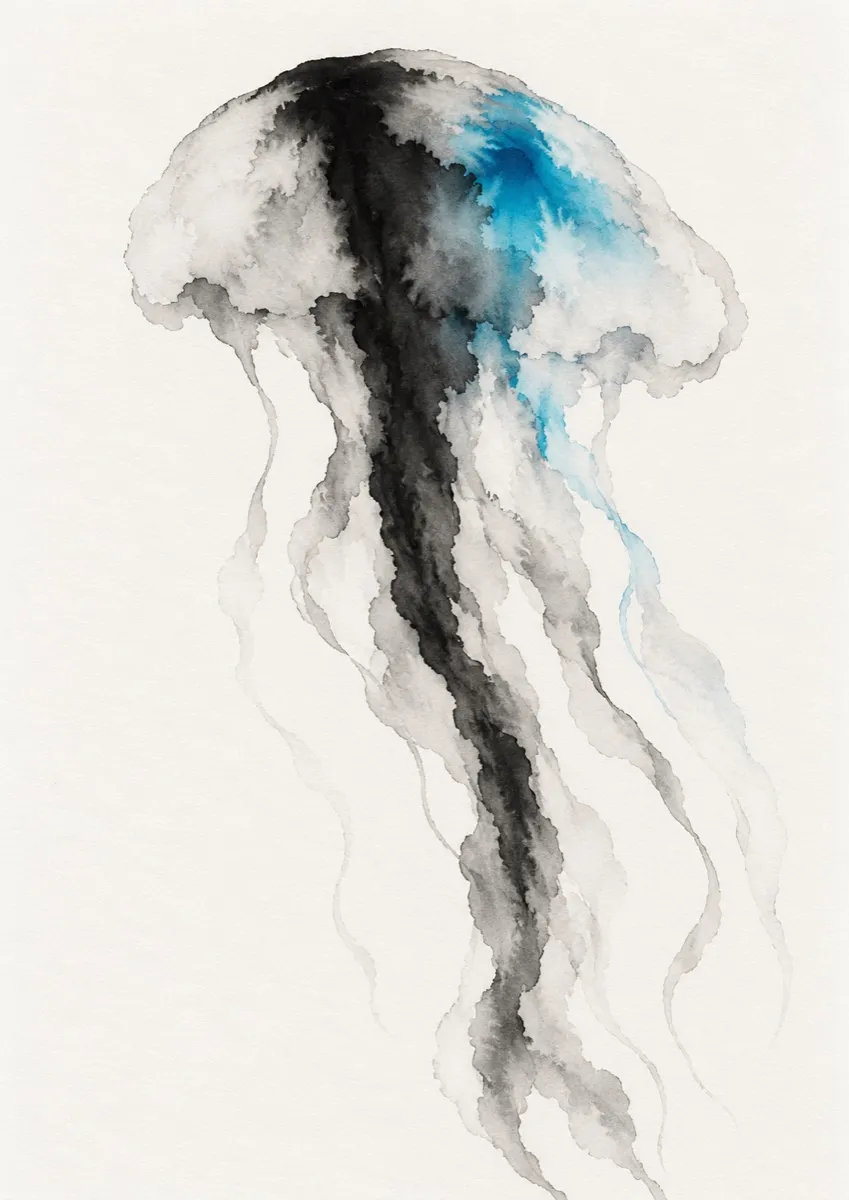
Generated by ChatGPT from a description of my process. The black stroke bends with the jellyfish, which is not how the stroke works.
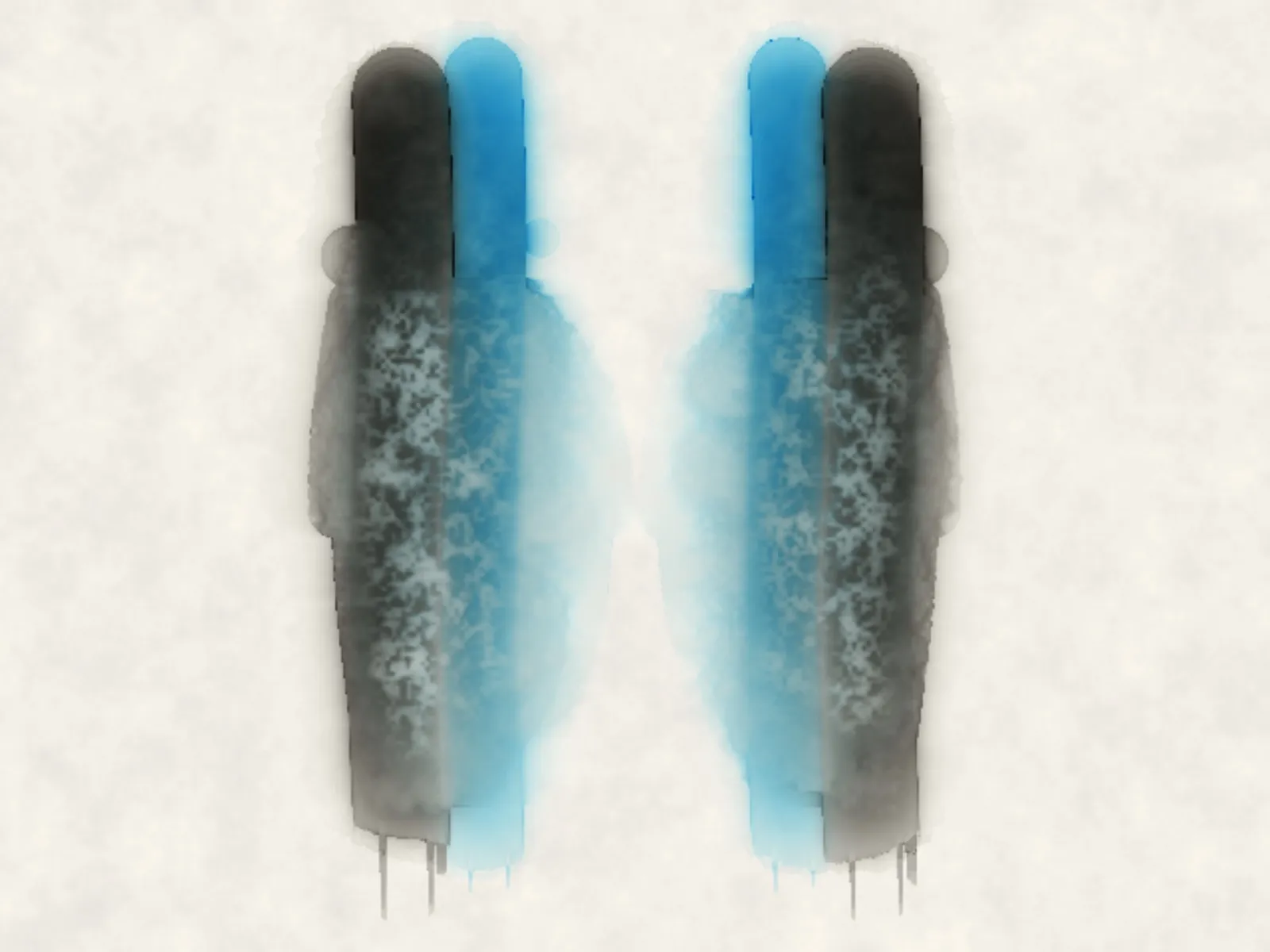
The last simulation. The water-drawn feet show up, and it still looks nothing like the painting.
How I judged it
- Nothing counted as accepted unless I accepted it. I accepted nothing
- Experiments listed their rules before running, and changed one thing at a time
- Every measure we used missed something I saw at once, so the measures informed the work and my eye made the call
Who did what
Claude built the style kit, the videos, the simulations and the measurements. ChatGPT recorded my technique, did the reading and generated images. Codex searched for footage. I set the goal, gave the references and made every decision to keep or drop something.
What I learned
- Get the real reference first. I had no footage of my own materials, so there was nothing to tune against and every fix was a guess. I built before I had the evidence.
- A look is not a process. My paintings come from an order of steps: water, then sumi, then cyan. Copying the finished look missed that each time.
- Numbers drift from the goal. A score can improve while the picture gets worse. A person still has to look.
- Write the stop rule early. I wrote one (“if it fails twice, stop”) and applied it late.
- Check what exists before building. Painting apps that simulate wet ink exist, and I had not tried one before building.
Update, 8 October. ChatGPT later made the illustration on the Mirror case, from one of my paintings and prompts describing my water-first technique. It works as a banner. It is still an interpretation of the look, not my process: getting there needs filmed footage of real ink on paper first.
Why I stopped
This sits outside my main goal, a product role. The next step needs a cheap, real input that only I can produce, not more hours of AI work.
Next
Film my own process from above, with a timer in frame: one drop on a wet patch, one on dry paper, one stroke through a water drawing, in black and then in cyan. Then try an existing painting app with the same gestures. Only after that decide whether to build anything.